Although this article is about brewing, the way I think about grind size comes directly from roasting and daily coffee service. I roast with the Aillio Bullet and have also brewed coffee for customers in my physical coffee shop for years. That experience has made one thing very clear to me: grind size should never be treated as an isolated brewing setting.
Bean size, roast development, weight loss, and final roast structure all affect how easily a coffee can be extracted later. This is why grind size should not be chosen by recipe alone. It is a brewing decision that begins with the structure created during roasting and is confirmed in the cup.
Brewing variables can be broadly divided into two categories: those that are primarily physical in nature, and those that are primarily chemical.
Physical variables (such as grind size) generally need to be addressed before chemical variables (such as temperature). The reason is simple: the cellular structure of coffee seeds is extremely dense and not easily extracted—unless long immersion allows soluble compounds to leach out on their own.
How to Choose the Right Coffee Grind Size
Grind size comes first. Get the physical structure right — then adjust everything else.
Coffee cells are much smaller than we might imagine, and they need to have a chance to come into contact with water in order to be extracted.
Bean size, roast level, and processing all change how easily a coffee gives up its solubles. This page is a simple rule – set for choosing a starting grind—and for recognizing the “parameter trap,” where a coffee looks light but behaves like it needs a coarser grind.
How Bean Size Affects Coffee Grind Size
The smaller the beans are, the denser their structure tends to be, and the harder they are to extract — so you generally need to grind finer, such as with many Ethiopian coffees.
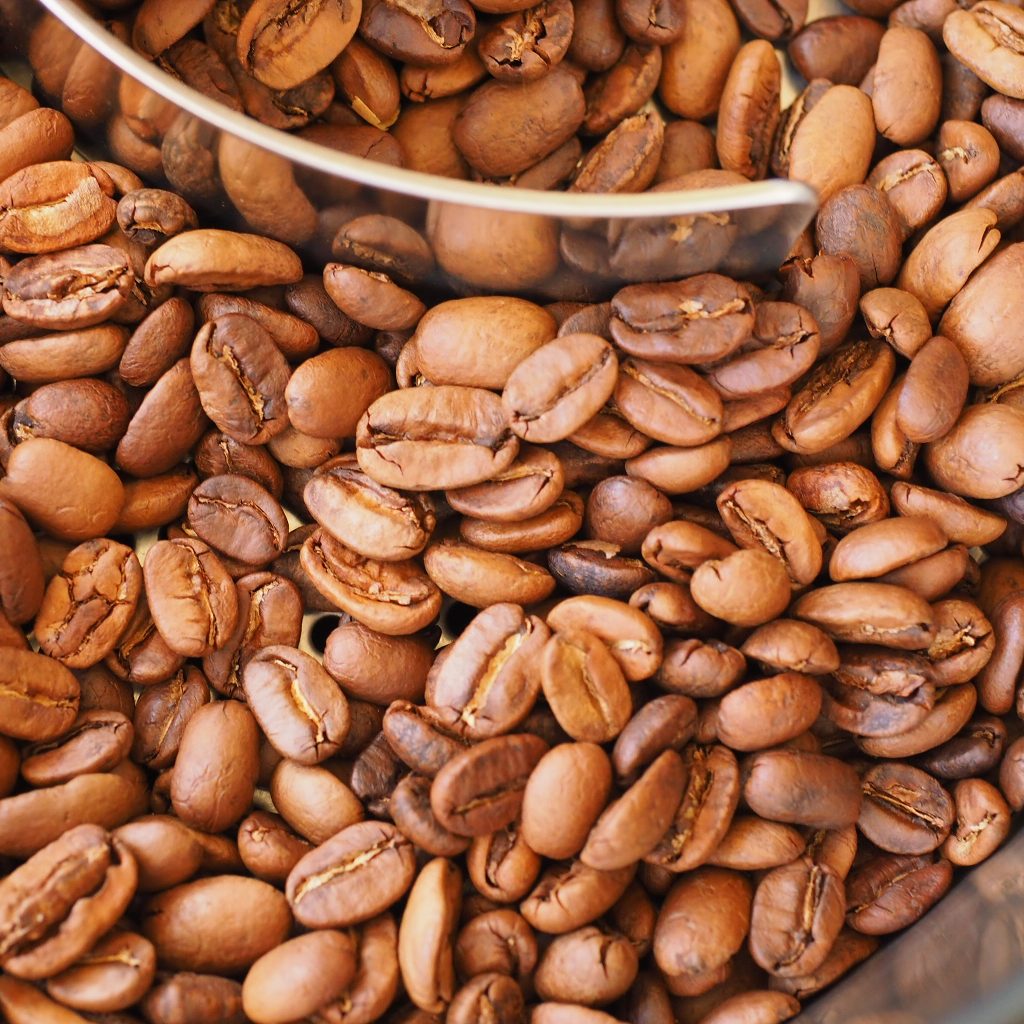
On the other hand, the larger the beans are, the larger their cells tend to be, and the easier they are to extract — so you generally need to grind coarser, such as the Pacamara variety. Pacamara is the loosest and softest bean I’ve ever worked with.
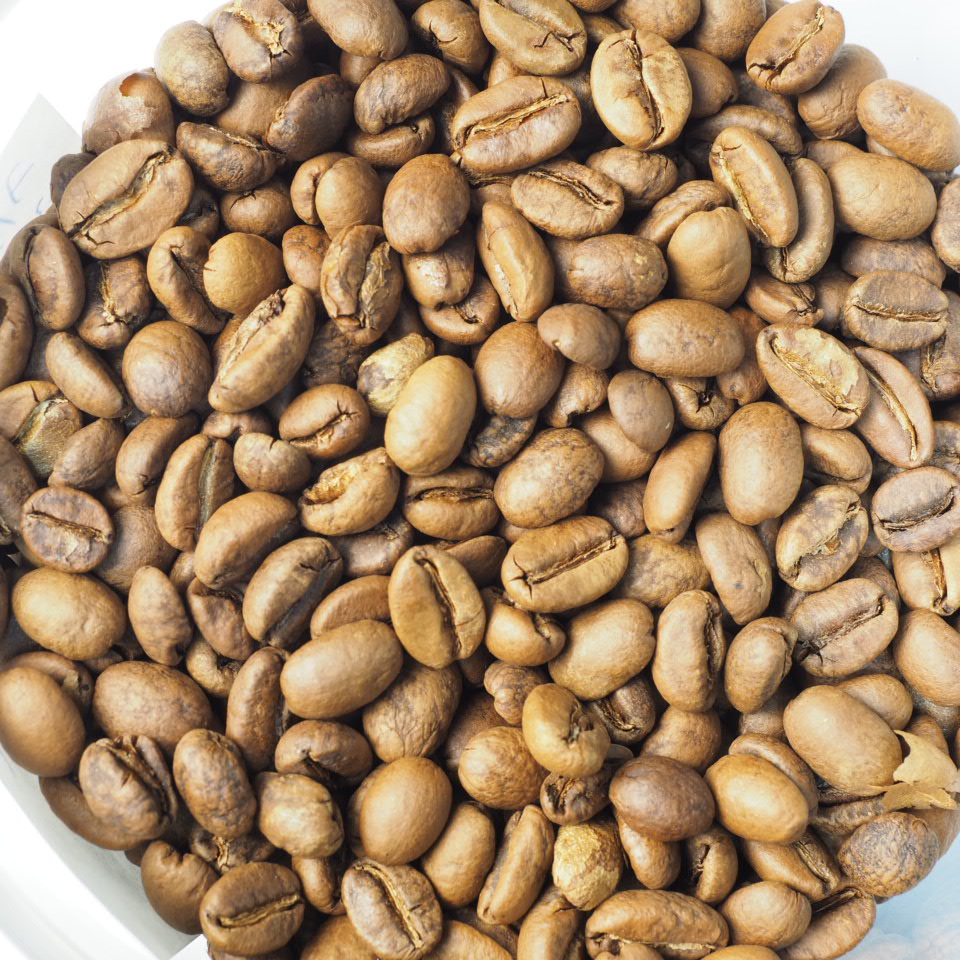
The first photo and the second below were taken separately. Therefore, you can’t compare the bean size directly looking at the pictures. But in reality, the Pacamara beans below are much larger than the Ethiopian beans.
Small Ethiopian Coffee Beans: Why They Usually Need a Finer Grind
This is an Ethiopia, Yirgacheffe, Kebel Aricha Kurume, Walichu, Natural Processed. And for natural-process coffees, the grind should be just slightly coarser than for washed coffees—only slightly.
Large Pacamara Coffee Beans: Why They Usually Need a Coarser Grind
This is a Guatemala, Sierra de las Minas, La Bella, Pacamara, Natural. The natural-process Pacamara beans are the largest and softest coffee beans I’ve ever roasted, so they need the coarsest grind. Roasting them also requires a unique approach.
How Roast Level Affects Coffee Grind Size
The darker the roast (the higher the end temperature), the more the beans expand and open up — so you generally need to grind coarser, such as a dark-roasted Brazil.
The Grind-Size “Parameter Trap”: Why Roast Appearance Can Mislead You
One thing to watch out for: some coffees may look like they’re roasted “light,” such as Ethiopian naturals. However, natural-process coffees often finish at a higher end temperature.
Compared with Ethiopian washed coffees, they usually still need a slightly coarser grind, just a little bit coarser. Such a small difference in grind size renders a big change in flavor. (Another thing, for my Ethiopian naturals, brewing often starts around 88°C.)
And that “slight difference” is where your grinder really earns its keep.
Flat vs. Conical Burr Coffee Grinders: How to Choose for Brewing
The differences between flat burrs and conical burrs are discussed again and again, but to me, both are capable of producing delicious coffee. The more important question is not which one is more premium, but which grinder best fits your budget, your brewing needs, and your flavor preference.
Flat vs. Conical Burrs: What’s the Difference?
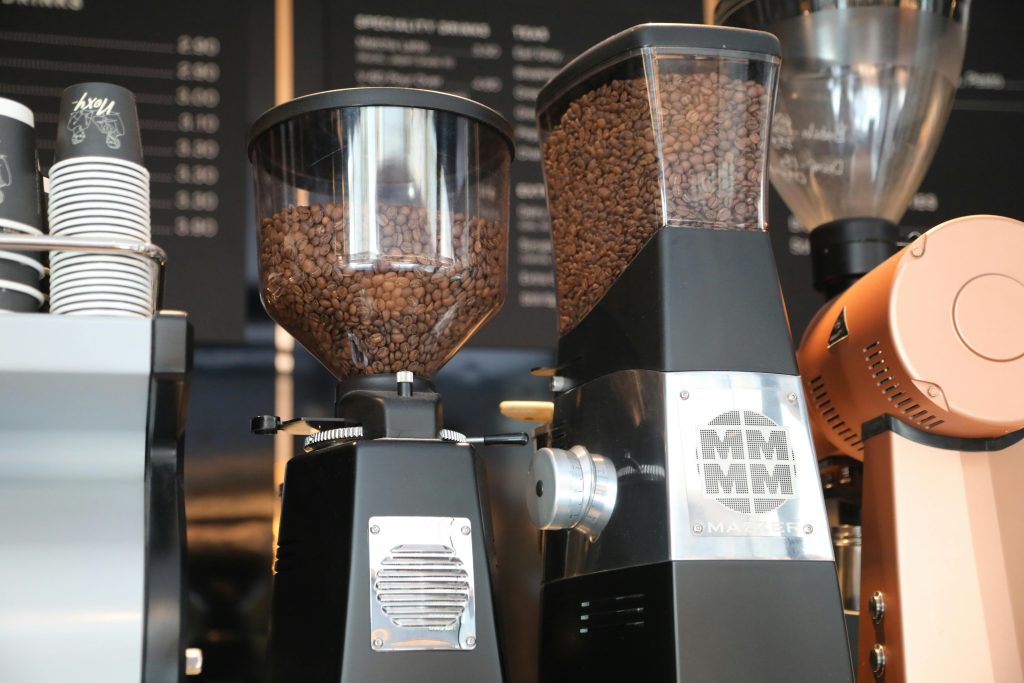
There are two main types of burrs used in coffee grinders on the market: flat burrs and conical burrs. Many coffee professionals say that flat burrs tend to produce more pronounced aroma, while conical burrs tend to bring out more sweetness. My view is that both are excellent. What matters most is which one you personally prefer.
The grinder brands I like are Mazzer and Mahlkönig. Some Mazzer models use conical burrs, while most Mahlkönig grinders use flat burrs.
How to Choose a Coffee Grinder for Brewing
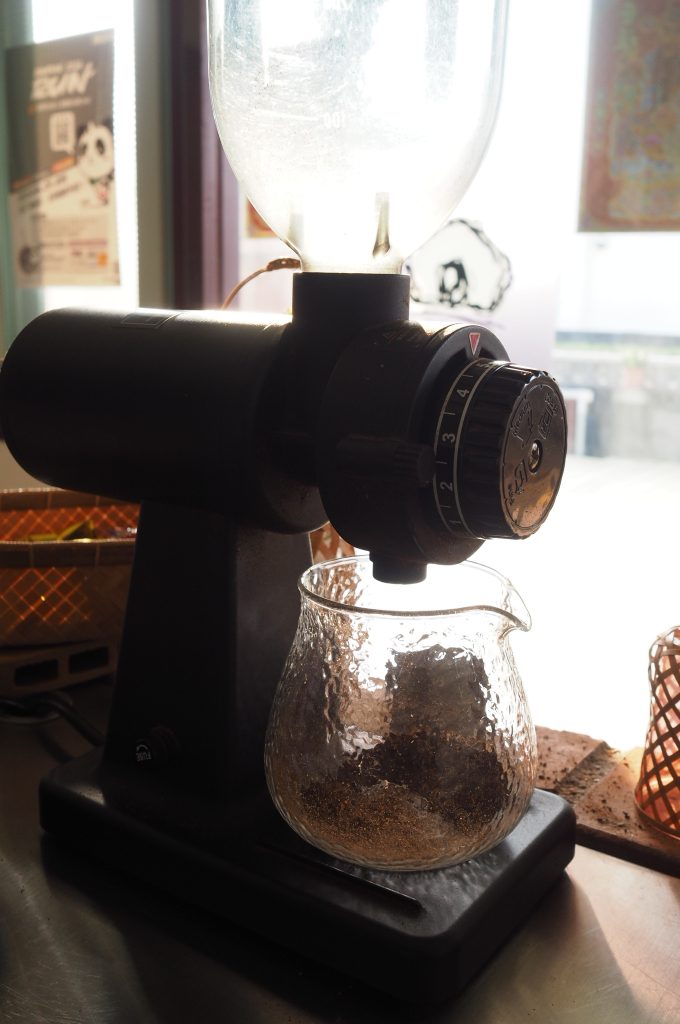
Of course, grinders are often a product where you get what you pay for. In Taiwan, many specialty coffee shops use large commercial grinders that cost at least USD 2,300 or more. But take a look at my grinder:
It is actually just a home grinder, although I replaced the burrs with SSP Flat Burrs. The reason I do not use a large commercial grinder is simple: renovating the café already cost too much money, and at the moment I cannot afford to spend that much on a grinder. A good grinder produces an excellent particle size distribution and desirable particle shapes, and these are major reasons why coffee can taste so good.
I am not saying that expensive grinders are not worth it. On the contrary, I fully recognize the value of a good grinder. What I want to say is that roasting is still the most important part. Because my resources were limited, I could not buy a large grinder, so I placed a very, very strong emphasis on coffee roasting. I kept improving my roasting, and in a way, it felt like finding a way to survive when there was no other option.
I have been running my café with this small grinder for nearly five years. You can check the reviews of my café on Google Maps. The positive reviews there are largely the result of how seriously I take roasting.
So how should we choose a grinder that suits us? Go to a café that uses the grinder you are interested in and taste the coffee there. Ask the owner about it as well. Durability, reliability, and ease of maintenance should always be the top priorities. After that, if you like the flavor profile it produces and the price is acceptable, that is enough.
Many coffee grinders emphasize “particle size consistency,” but in reality, the particle size distribution of a good grinder can never be completely uniform. There will usually be both coarser and finer particles. The key is that the difference should not be excessive.
What Makes a Good Coffee Grinder?
In addition, I believe that a normal grinder should not require users to spend extra time sifting coffee grounds. If you still need to spend time sifting after grinding, can that really be considered a good grinder?
So when the particle size difference is so large that some cells are over-extracted while others are under-extracted, that usually means you are using a very poor grinder, or a non-professional blade grinder.
There is no need to sift the grounds. In fact, coffee needs both coarser and finer particles for the flavor to become more complete and layered. What we taste in the cup is a combination of many different flavors.
The main difference between good and bad grinders lies in the distribution of different particle sizes, as well as the number of grind settings available.
For example, I may feel that a Kenyan coffee should be ground at 5.8 on my grinder. But my grinder is quite small, and after 5.5, the next setting is already 6. There is no 5.8 option. This often caused problems for me in the past.
Previously, I would often turn the grind adjustment dial during the grinding process, so that the grounds in the cup would contain both coarser and finer particles. I think that with a larger grinder, this would probably not be an issue. This is one of the advantages of a larger grinder: it allows for much finer adjustments.
However, I no longer use this method of turning the dial during grinding. When the number of grind settings is limited, which is often the case with home grinders, I would rather grind slightly finer than too coarse. Grinding finer usually gives the coffee more flavor.
What If Your Coffee Grinder Has Limited Grind Settings?
The answer is: Adjust the brew ratio.
How to Adjust Brew Ratio When Grind Size Is Limited
For example, on my grinder, a washed Kenyan coffee should probably be ground at around setting 5.8. But my grinder only has 5.5 and 6. In that case, I would rather grind at 5.5 and reduce the brew water slightly. After the extraction is finished, I then add bypass water to adjust the final strength.
In many cases, when coffee cannot be extracted properly, the problem is often caused by having too few grind settings. This is because the structure of every coffee bean will always be different. Processing method and roast level also matter.
Even when the screen size of the beans is the same, the structure of a natural Ethiopian coffee is usually looser than that of a washed Ethiopian coffee. Also, the higher the end temperature of a natural coffee, the easier it should theoretically be to extract.
When Should You Grind Coffee Coarser or Finer?
The following information is very practical and can be noted directly:
Coarser
Finer
Natural
Washed
Dark Roast
Light Roast
Larger Bean
Smaller Bean
Smart readers may naturally wonder: if we have a “small-bean” + “natural-processed” Ethiopian coffee, would its brew ratio be similar to that of a “large-bean” + “washed” coffee?
Yes. Sometimes the brew ratio may look similar on the surface, but the logic behind it is completely different.
So how can we quickly map out the right brew ratio in our head? When brewing coffee behind the bar, we often do not have enough time to think through every variable from scratch. A practical suggestion is to memorize the brew ratios of a few specific coffees and use them as reference points.
For example, we can pay special attention to the brew ratio of a washed Ethiopian coffee. Then, when we are working with a natural Ethiopian coffee, we only need to make a small adjustment based on the washed Ethiopian reference.
Of course, once the brew ratio is adjusted, the other brewing parameters also need to change accordingly. These will be explained in detail in Chapter 9.
When brewing hot coffee now, I tend to use the same grind setting, 5.5, on my grinder, unless I am brewing extremely small beans such as Yemen. Then I make fine adjustments by using different drippers, different starting temperatures, and different brew ratios. The results are usually very good.
I will explain this in much greater detail in Chapter 9, How I Brew My Coffees.
There are also several other important chapters. For example, drippers will be discussed in detail in Chapter 5, Percolation and Immersion (Flushing and Diffusion). I think this may become one of the most detailed practical guides available today on how different drippers should actually be used.