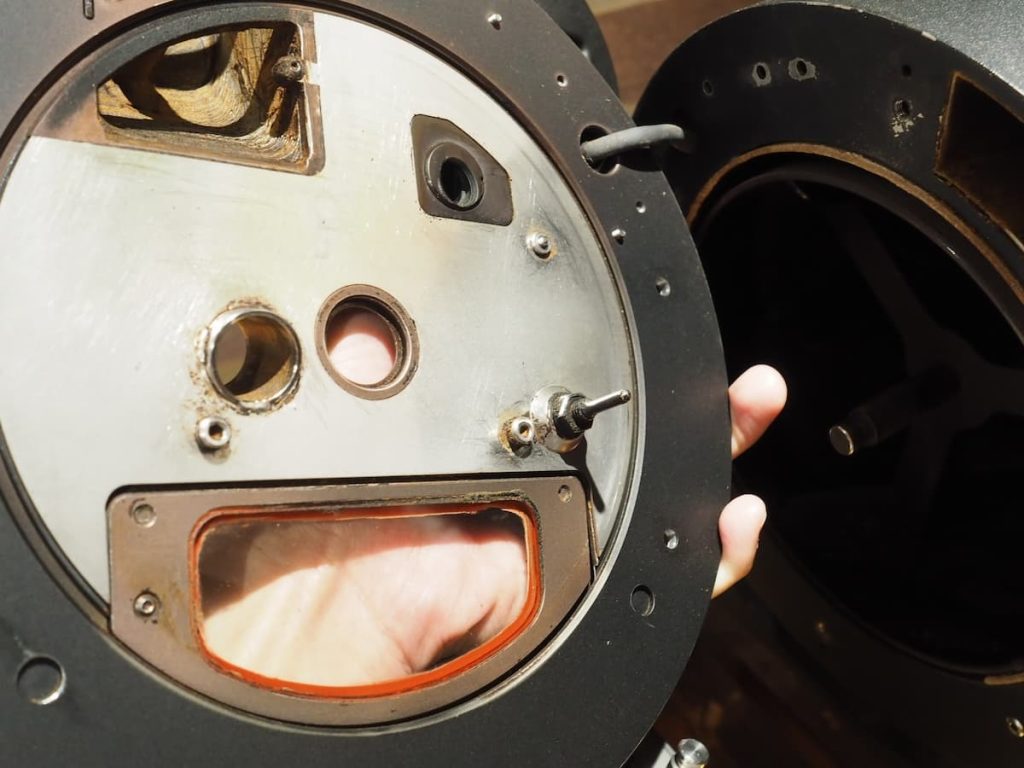
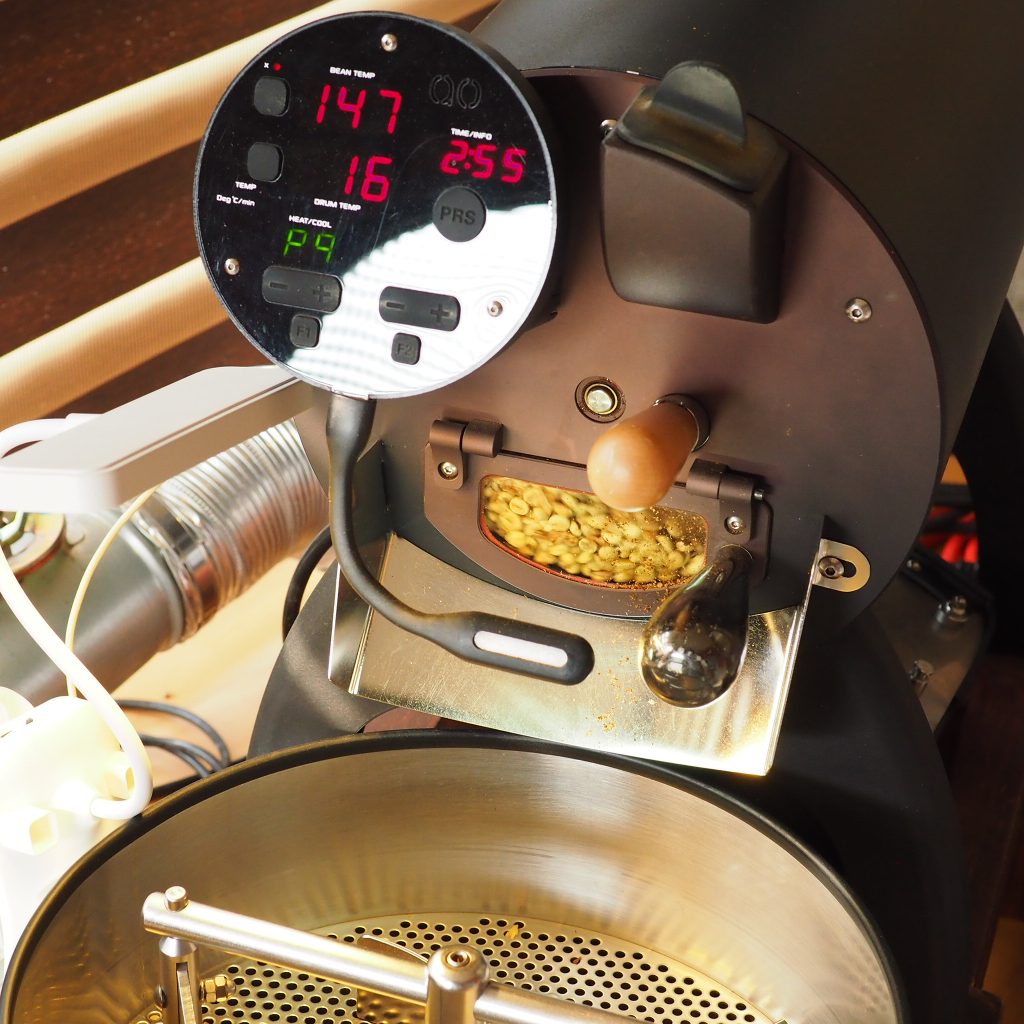
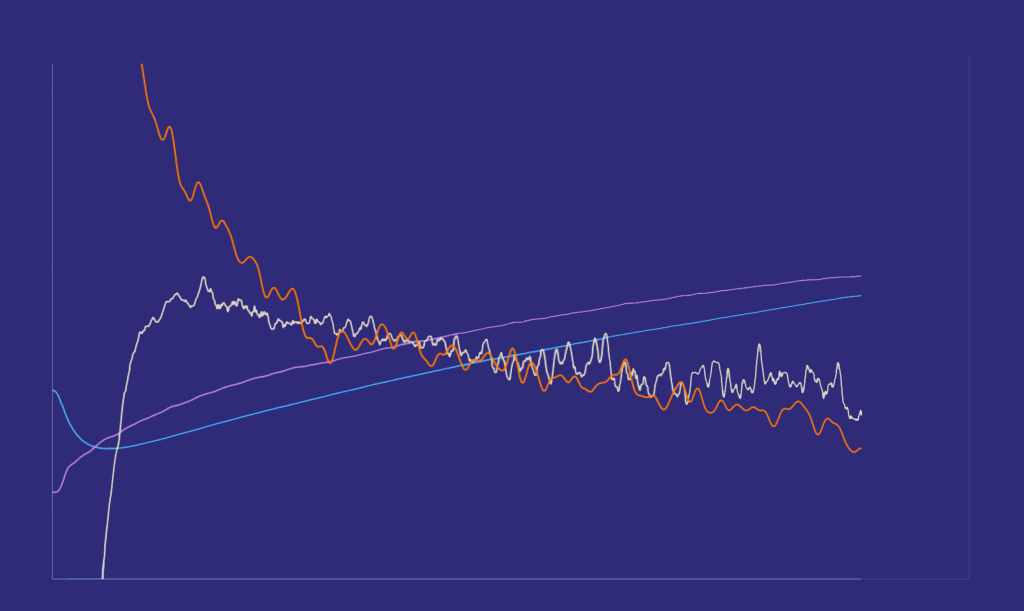
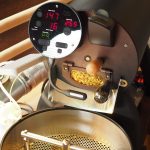
In the Aillio Bullet R1 / R2, RoR should not be understood from only one temperature reading. The Bullet has two temperature sensors: the IBTS and the traditional bean probe. Since these two sensors behave differently, their RoR readings should also be interpreted differently.
IBTS gives a more immediate view of what is happening on the surface of the bean mass, while the bean probe gives a more cumulative reading affected by batch size, drum speed, ambient temperature, and moisture movement.
This article explains how to read IBTS RoR and bean probe RoR together, why they do not always move in the same way, and how their interaction can reveal heat absorption, moisture release, roasting momentum, and what I call the moisture chain.
Quick FAQ
Should I use IBTS RoR or bean probe RoR when roasting on the Aillio Bullet?
It is best to use both. Bean probe RoR is used to observe the dynamic behavior of moisture movement, while IBTS RoR is used to read the more immediate surface temperature response of the bean mass.
Should I reduce power or increase airflow to control a declining RoR?
Both should be used together. Before roasting, we need to know the maximum airflow level planned for that batch.
Usually, airflow is gradually increased toward the planned maximum level, and then power is reduced step by step. However, there are exceptions, and sometimes power may need to be reduced earlier. Power reduction / Fan increase near the end of the roast is one of the most delicate and difficult techniques in roasting. The detailed operation and the logic behind these decisions are explained in the Member’s Section.
Why do IBTS RoR and bean probe RoR sometimes move differently?
Many roasters think the bean probe is simply delayed. In reality, the bean probe is strongly affected by moisture movement. Sometimes moisture release may heat the bean surface, while in other situations it may cool the bean surface, which can make the bean probe appear delayed. Even if the bean probe has some delay, I do not think it becomes useless. It can still provide valuable information when read together with IBTS RoR. Read more in 5 typical fluctuations.
mins
Reading Time
All roasting articles in this guide are based on properly roasted coffee. For many Aillio Bullet users, the final missing step is fast and consistent cooling after drop.
Our Aillio Bullet R1 / R2 cooling tray helps make this step cleaner, faster, and more stable.
Introduction About IBTS And Bean Probe in the Aillio Bullet R1 / R2 Coffee Roaster
Real-Time Temperature Monitoring: (from Aillio’s official website)
The Infrared Bean Temperature Sensor (IBTS) provides unprecedented accuracy in monitoring your coffee beans’ temperature throughout the roasting process. Precision Features:
Non-contact infrared temperature measurement
Real-time data logging and analysis
Precise temperature control for consistent results
Advanced sensor technology for accurate readings
Integration with RoasTime software for detailed profiling
With IBTS, you can monitor the exact temperature of your beans, not just the air around them, giving you the precision needed to create perfect roast profiles every time.
Major Differences Between the Bean Probe and IBTS
The Infrared Bean Temperature Sensor (IBTS) provides real-time data, contrasting with the cumulative readings of the Bean Probe.
While the IBTS is unaffected by batch size and ambient temperature, it may exhibit fluctuations in readings, indicating potential roasting issues. Conversely, the Bean Probe’s cumulative nature ensures consistent readings, critical for moisture content management in coffee.
What does this mean?
They mean that I often use the bean probe to check how much moisture has escaped from the beans; while I often use the IBTS to check the current state of the bean surface, that is, how dry the bean surface is and how much terroir / moisture content remains on the surface.
When to Use IBTS and When Bean Probe Still Matters
Even though there are lots of variables, I still refer to both of them, because coffee roasting plays a lot with the control of moisture content. The bean probe is capable of detecting the leak of moisture content at the very first second.
Too much moisture content leaving the beans leads to crash of a curve, which, in my opinion, is not the optimal interpretation of a bean.
The best part of the IBTS is that it is not affected by batch size and ambient temperature. I always use its reading to decide when to drop the beans (when finished).
Be careful, the IBTS gives real-time data, while the bean probe is cumulative. This means, the reading of IBTS can be a big fluctuation when the moisture content isn’t well controlled. It may be 209°C now but reads 207°C at the next second, which is actually even lower. If the reading of the IBTS fluctuates a lot, there might be an issue in the roast.
On the other hand, the bean probe’s being cumulative means, the subsequent readings will always be higher than or equal to the previous ones.
Behavior of IBTS and Bean Probe During Roasting
Put simply, the reading from a traditional bean probe is affected by many factors:
Actual temperature of the beans
Batch size
Drum speed
Ambient temperature on that particular day
It displays as follows:
Batch Size:
When the bean probe is surrounded by more beans, the reading tends to be higher.
Drum Speed:
The lower the drum speed, the higher the bean probe reading tends to be.
Ambient Temperature:
The higher the ambient temperature, the higher the reading tends to be.
This is why the IBTS is better able to reflect the beans’ actual temperature at a given moment.
However, because the bean probe is cumulative in nature, it can still, to some extent, reflect the actual (total) amount of moisture being released.
A crashing RoR creates overly large terroir differences between adjacent layers, which leads to a lack of continuity in flavor. Certain flavors (notes) only appear at a particular roast level or when a specific amount of terroir is preserved. If a crash occurs, it becomes difficult to ensure that the terroir content develops in a gradual, layered way.
Before understanding these roasting principles, there is no point in discussing which types of molecules produce which flavors, because that already goes beyond what humans can truly control. Yet many people do exactly the opposite — they ignore the fundamentals and obsess over chasing sensory intensity. As a result, more and more people start infusing coffee beans heavily or even adding flavoring directly. I strongly disagree with these practices.
RoR Actually Reflects the State of the Moisture Chain
Roasting is a fully dynamic process. Any roast curve given by someone else is not necessarily useful as a reference, unless that person can clearly explain why the coffee should be roasted that way. But honestly, many people can roast for a lifetime without truly understanding roasting — so how could they explain it clearly?
The trend of RoR is absolutely related to what I call the moisture chain. I am not entirely sure what the best English translation for ”moisture chain” would be, but I imagine it like this: within the coffee bean, each layer from the outside to the center contains moisture, and the water molecules are arranged in a connected line from outer to inner layers. That is what I mean by the moisture chain.
In coffee roasting, the real task is to control the loss of moisture content properly from beginning to end. The moisture must leave in just the right way — not too much, not too little, not too fast, and not too slowly. As moisture leaves the bean, it carries terroir away with it. Therefore, to some extent, controlling moisture is also a way of controlling terroir.
Controlling moisture has two very important meanings:
It controls terroir, as mentioned above.
It heats the places that the steam passes through.
The Moisture Chain Also Contributes to Momentum During Roasting
When many professionals discuss how coffee beans absorb heat, they tend to focus only on conductive heat from the drum, radiant heat from the drum, and convective heat from the air. In reality, coffee is such a sensitive material that almost every form of heat can affect it. For example, when brewing coffee in winter versus summer, the water temperature must be adjusted — brewing water in winter generally needs to be hotter than in summer. So, even slight changes in weather conditions require corresponding adjustments during roasting.
When discussing RoR, it is impossible to ignore the steam released from the moisture chain after the beans are heated. This steam contains a considerable amount of heat energy, and before it leaves the bean, it also heats the areas it passes through inside the bean.
This is why, when the moisture chain remains “smooth and continuous”, the surface temperature tends to rise more quickly. In addition to the forms of heat that are commonly discussed, other parts of the bean continue to be heated by the moisture content emerging from within. As a result, the roasting process becomes more efficient.
The Aillio Bullet has two temperature sensors: the IBTS and the traditional contact-based bean probe. In theory, the trends shown by these two sensors should be consistent. In practice, however, they often appear to diverge. This inconsistency can make it difficult for us to make the right decisions, or even lead us to make decisions that go against what would actually be correct.
Pay Attention to RoR While Thinking About Gain And Loss
As mentioned earlier, RoR reflects the trend of moisture leaving the beans, and also reveals the balance of gain and loss during roasting. Gain refers to the gain of momentum, while loss refers to the loss of moisture content / terroir, which also implies a loss of heat.
Here, “balance” does not mean Gain and Loss are equal. Instead, it describes how these two processes interact and shift throughout roasting.
After the RoR peak, LOSS should always be higher than GAIN. Moreover, the LOSS should even become more and more considerable as roasting process progresses.
5 Typical RoR Fluctuations
Only condition B is truly normal. However, in reality, perhaps only around 5% of roasters can achieve this result. If we apply a stricter standard, the number may be closer to 1%.
So how can we achieve it?
This may sound obvious, and I have said it more than once, but the answer is still the same: you need to understand the coffee, the environment, and nature.
Roasting coffee is never easy. I have been roasting with the Aillio Bullet since 2017, and most of my understanding comes from comparing roast profiles with actual cup results. This is why I want to share these observations on this website.
Let’s take a look at the 5 situations where both RoRs dance together:
A. Loss > Gain, but Moisture Release Is Too Low
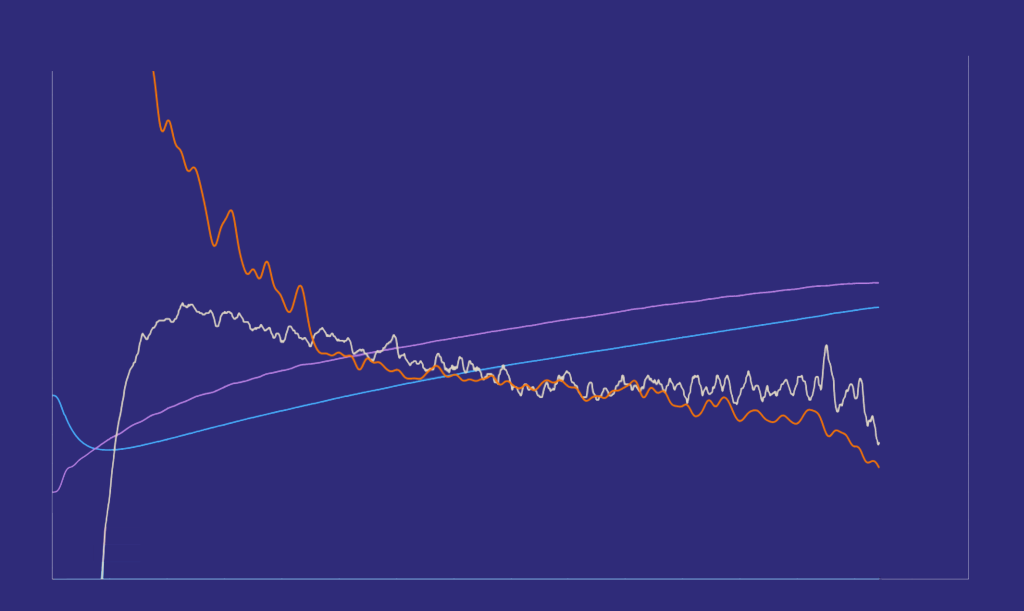
If too little moisture is being released, the RoR of both sensors will gradually decline together with a smooth and steady slope, and flicks and crashes are less likely to occur. One example is an Ethiopia Yirgacheffe Washed profile.
In this case, loss (moisture content) is not strong enough.
Coffee roasted in this way will not taste good.
The origin character will be too dominant, and the cup will feel flat, with no sense of space or dimensionality. This usually happens in washed process coffee.
Yet, it is still a good-looking profile. This is why taking a random beautiful profile online and not asking the reasons behind those decisions is dangerous.
B. Balanced Gain and Loss
If moisture release is at a normal level, the RoR of both sensors will also decline together with a smooth and steady slope along the whole roasting session. In this case, the Gain And Loss is balanced.
Coffee roasted under these conditions will taste good.
C. Loss > Gain, Close to an RoR Crash
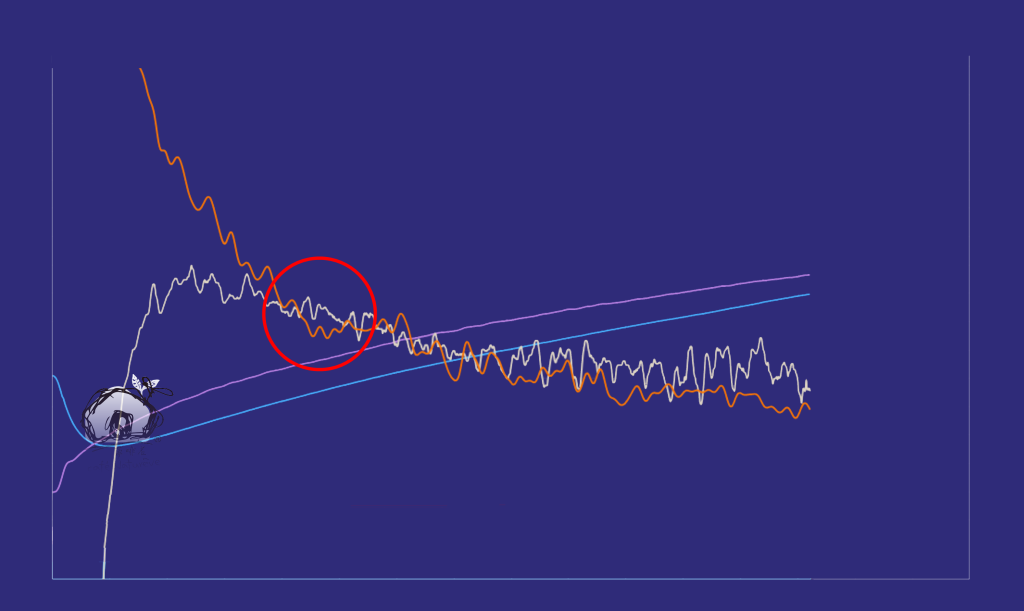
If moisture release is normal to slightly high, the bean probe will detect the increased moisture first, so its RoR will rise, while the IBTS RoR remains normal.
This indicates that moisture is being driven out vigorously, but not so much that the moisture chain has to be broken.
This usually happens when all beans are approaching first crack, or after first crack in natural-processed coffees.
Coffee roasted under these conditions can still taste fairly good, but not as good as condition B.
D. Loss > Gain, Almost an RoR Crash
At this point, the coffee is already starting to move toward an unpleasant cup.
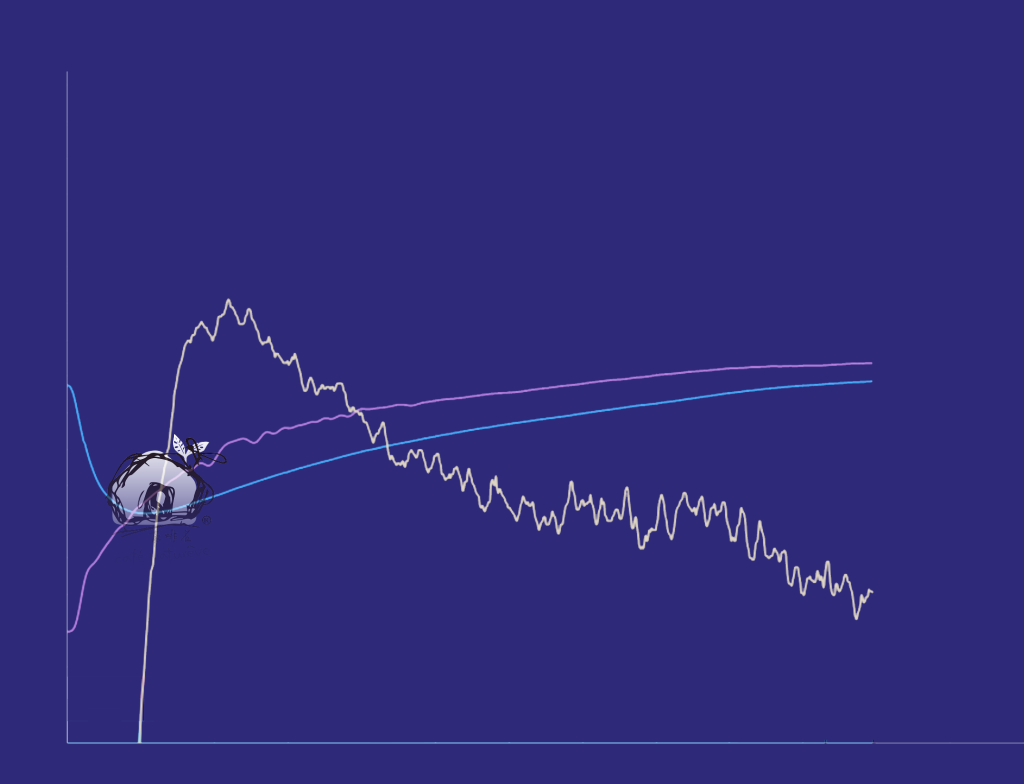
If moisture release becomes even stronger, but not strong enough to completely break the moisture chain within the bean, the bean probe RoR may rise while the IBTS RoR continues to decline. At this stage, the bean as a whole is being cooled more strongly, meaning loss is much greater than gain.
This often happens when roasting natural coffees, and if it is not properly controlled, it will lead to a stalled RoR later on, as indicated below:
If the crash is mild, the roast can still be adjusted and partially saved. But if the problem becomes severe, it is almost impossible to fix. The beans may become over-roasted on the outside while remaining underdeveloped on the inside.
In the Member’s Section, I will explain how to prevent the situation, and save the roast as much as possible within its limits.
Member’s Section.
E. Loss Excessively High
In this case, it will not be the worst cup, but there is still room of improvement.
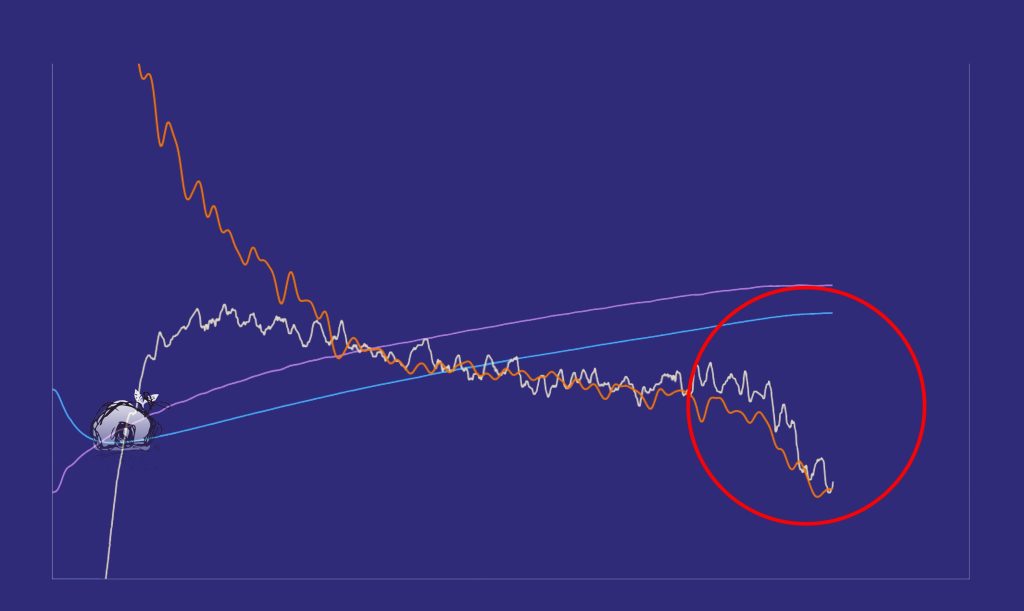
If moisture release becomes excessively high, the RoR of both the IBTS and the bean probe will crash together. This usually happens after first crack in washed coffees. If it occurs after first crack, it usually is not a major problem. In this case, loss >> gain.
“It usually is not a major problem.” That being said, I mean that most people may not notice it clearly in the cup. However, the roast can still be improved. If we want the coffee to taste cleaner, more complete, and closer to world-class quality, this kind of issue is still worth correcting whenever possible.
Quick Summary Of Bean RoR and IBTS RoR’s Fluctuations
In general, there are 4 common situations roasters panic about. (Despite the fact that 5 types are mentioned above.) I only start adjusting power or fan when:
both Bean RoR and IBTS RoR are about to flick When both Bean RoR and IBTS RoR are about to flick, it usually suggests that the bean surface is really drier and the outer layes of the beans gets real momentum.
both Bean RoR and IBTS RoR are about to crash When both Bean RoR and IBTS RoR drop sharply together, it usually suggests that too much moisture is leaving the beans at the same time, which can pull the roast into a crash.
When Bean RoR rises while IBTS RoR continues to decline steadily, it may simply indicate that more water vapor is being released.
When Bean RoR declines while IBTS RoR rises, sometimes quite sharply, it may indicate that the released water vapor is temporarily heating the bean surface.
For how to rescue a crashy RoR, see the Member’s Section.
As the roast approaches the final stage, the surface and outer layers of the beans become drier and drier. If heat is not reduced, it is essentially like dry-roasting the bean surface. At that point, the RoR may begin to stall, resulting in a baked flavor. This indicates that not enough moisture is leaving the beans that the RoR can no longer maintain a declining trend. On the IBTS, this typically appears as a very high IBTS temperature.
However, please note that most crashes are not caused by reducing power too early. They are usually caused by an incorrect combination of Preheat Temperature, drum speed, fan speed, and the way heat reduction and airflow are handled near the end of the roast. The detailed adjustments will be explained in the Member’s Section.
We can also understand heat reduction as a way to prevent the moisture chain from breaking.
Some people never reduce heat at all and rely entirely on airflow control throughout the roast. This can also make the RoR look good, but the resulting coffee often tastes worse.
To understand why using airflow alone to control RoR throughout the entire roast tends to produce poorer flavor, and to learn how to reduce heat properly, see the Member’s Section.
How to Roast
Ready to Put These Ideas Into Practice?
Follow my step-by-step guide to roasting on the Aillio Bullet R1 / R2, from understanding your coffee to reading the roast profile and deciding when to end the roast.
You’re welcome to reference or build on the ideas in this article. If you do, please include a link to the original Café Naturêve article.
Aim to become one of the best roasters in your region
Our cooling tray helps serious Bullet users improve the final step of their roasting workflow: faster cooling, cleaner chaff control, and more consistent post-drop handling.